Table of contents
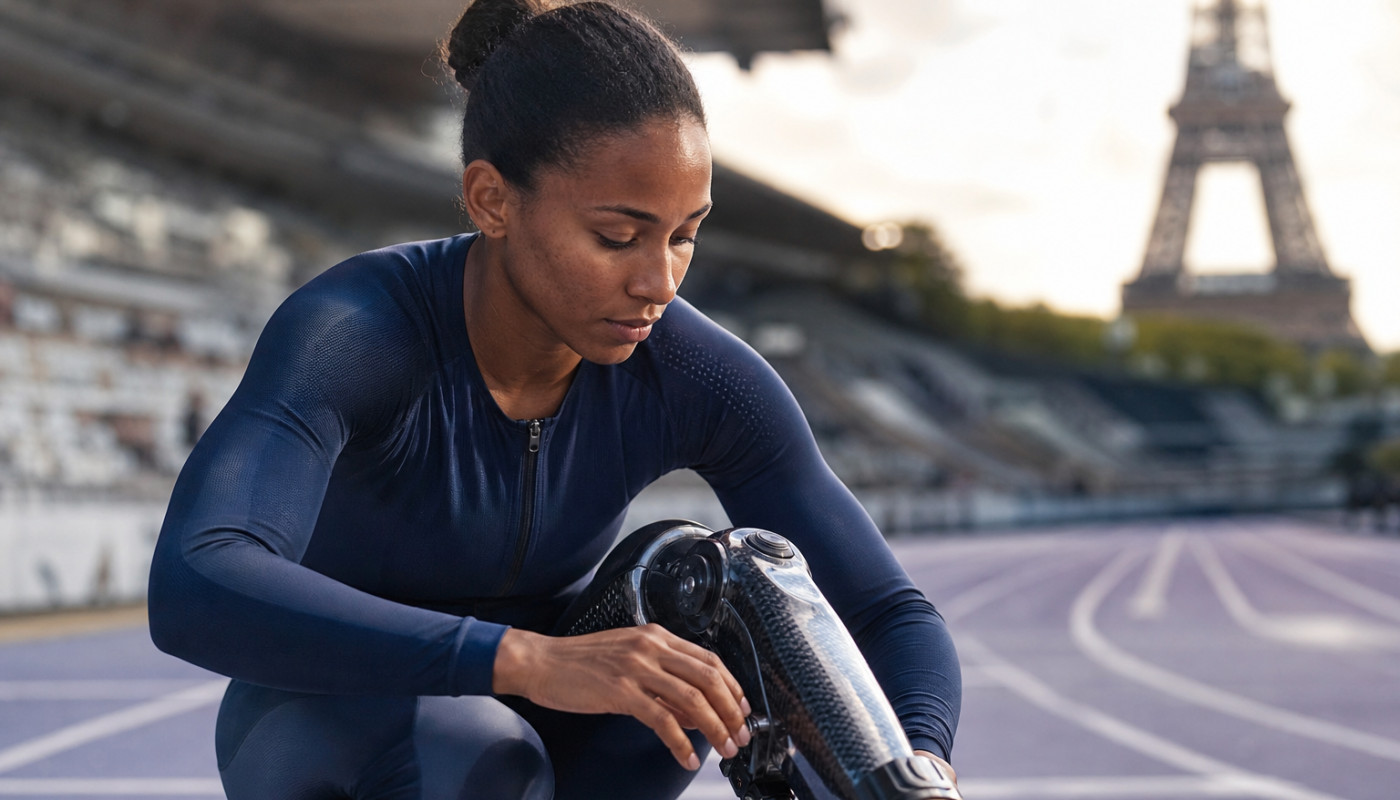
With Paris 2024 now in the rear-view mirror, the most revealing stories are no longer only about medals, but about the invisible race underneath them, where physiology meets engineering, and where a season can turn on a marginal gain measured in watts, millimetres, or milliseconds. Across track, pool, road, and arena, elite athletes described a common reality: the body still pays the bill, yet innovation increasingly shapes the invoice. What they shared, in effect, is a map of modern endurance under pressure.
Margins are tiny, and tech is everywhere
How do you win when everyone is world-class? At Olympic level, the answer is rarely a single “breakthrough”, and almost always an accumulation, and the data supports the point. In timed sports, the gaps are routinely microscopic: World Athletics results over the last two cycles show major-championship finals often separated by tenths of a second, while in swimming, the difference between the podium and fourth can be a fingertip, a breath pattern, or a slightly cleaner turn. That reality has pushed teams to treat performance like a system, where equipment, recovery, nutrition, biomechanics, and decision-making interact, and where each part is measured, audited, and refined.
Sports technology has moved from niche to baseline, and the Olympic ecosystem now reflects that shift. Wearables track heart-rate variability and sleep, power meters quantify cycling output in real time, and force plates, motion-capture cameras, and inertial sensors are used to spot asymmetries before they become injuries. Even outside the lab, elite squads increasingly carry “portable performance units” to camps, with lactate testing, blood markers, and hydration analysis on hand, because the goal is not simply to collect numbers, but to act on them quickly. For a reader, the key takeaway is blunt: training is no longer judged primarily by how hard it felt, but by what the metrics say the athlete can absorb, and what the next block demands.
The technology is not just about monitoring; it also changes how endurance is built. Coaches describe a shift toward individualised thresholds, because two athletes can run the same session, post the same pace, and experience very different internal loads. That has made concepts like “time in zone” and “critical power” more operational than theoretical, and it explains why elite programmes obsess over repeatable testing, whether through graded treadmill protocols, controlled pool sets, or cycling “ramp tests”. It is also why innovations that look small, such as improved heat-acclimation plans or altitude strategies guided by oxygen saturation and haemoglobin mass trends, can materially change how well an athlete arrives at a championship.
Yet the same athletes also emphasise a boundary: innovation only works if it is stable, trusted, and integrated into habit. A watch that distracts, a sensor that misreads, or a platform that overwhelms can do the opposite of what is intended, especially under Olympic pressure, when confidence matters as much as conditioning. The best performance teams, by most accounts, are not the ones with the most gadgets, but the ones that make technology disappear into routine, and keep decision-making simple on race day.
Endurance still starts with the human engine
The most advanced tools can’t outrun biology. Endurance performance remains anchored in fundamentals that are remarkably stubborn: aerobic capacity, movement economy, lactate clearance, and the ability to repeat high outputs while managing fatigue. Physiologists often point to VO₂max, lactate threshold, and running economy as pillars, and although athletes dislike being reduced to numbers, they acknowledge that elite success usually requires a rare combination of all three. Technology helps identify and sharpen them, but it does not replace the long, repetitive work that builds them.
That is where the conversation becomes less glamorous, and more honest. Olympic endurance is built on years of volume, careful intensity distribution, and disciplined recovery, and innovation tends to amplify what is already present. If an athlete’s base is shallow, no shoe, suit, or algorithm will save the day; if the base is deep, marginal gains become meaningful. Coaches also underline that endurance is not just about “more”, it is about tolerating the right load at the right time, and this is where modern monitoring earns its keep. The best programmes use data to avoid the two classic errors: pushing too hard when the body is signalling risk, and backing off unnecessarily when the athlete is actually ready to progress.
Nutrition and hydration, once treated as common sense, have become a competitive battleground. Carbohydrate strategies, in particular, are now far more precise, with athletes training the gut to tolerate higher intakes and timing gels or drinks around race dynamics, because late-race performance often collapses when fuel runs out, not when the legs “suddenly” fail. Heat and humidity have also pushed teams to treat fluid and sodium plans as individual prescriptions, rather than generic advice. The result is a more clinical approach to endurance, where a long run or a hard set is no longer only a test of will, but also a rehearsal of fuelling, cooling, and pacing decisions.
Sleep, too, has become a performance variable rather than an afterthought, and athletes now speak openly about chasing consistency over perfection. Travel across time zones, late-night competition schedules, and pre-race nerves all complicate recovery, and that is one reason wearables have found a foothold: they provide a daily signal, even if imperfect, that can anchor choices. Still, the most experienced competitors describe the same lesson: the body is not a spreadsheet, and learning to interpret signals, combining data with feel, remains a skill in its own right.
Innovation raises questions of fairness and access
When does progress become an advantage too far? Paris 2024 revived an old debate in modern form, because the line between legitimate innovation and distortion is constantly renegotiated by governing bodies, sponsors, and athletes. The “tech era” has already produced flashpoints: high-tech swimsuits that contributed to a wave of record times before tighter regulation, and carbon-plated running shoes that forced federations to define what counts as acceptable assistance. These controversies are not simply about equipment; they are about trust, because fans and competitors want to believe that medals reflect human excellence, not just budget and engineering.
Access is the other uncomfortable question. Not every athlete arrives with the same support, and while the Olympic ideal is universal, the practical reality is uneven. Wealthier federations can fund altitude camps, advanced testing, bespoke equipment, and large multidisciplinary staffs, while smaller programmes may rely on limited medical coverage and basic facilities, and that disparity can widen over a four-year cycle. Even within wealthy nations, access can differ by sport, gender, and visibility, because resources often follow medals, and medals often follow resources. The feedback loop is hard to break, and technology can accelerate it.
Regulators have tried to keep pace, but they are often reacting rather than leading. Standards for shoe stack height, limits on certain suit materials, and approval processes for equipment are attempts to keep competition meaningful, yet they also create grey zones, and innovation tends to live in grey zones. In practice, the most sustainable approach has been transparency, clear thresholds, and enforcement that is credible, because ambiguity invites suspicion. The athletes themselves frequently sound pragmatic: they will use what is legal, because not using it can be self-sabotage, but they want rules that are coherent and applied consistently across events and nations.
For readers tracking the bigger picture, the intersection of sports technology and performance has become a public conversation, not a private one. Media scrutiny, fan literacy, and athlete advocacy have increased, and platforms such as BusinessCloud have highlighted how rapidly the sector is evolving, from data analytics to equipment innovation, and how that evolution pressures sport to define its values. The question is no longer whether technology belongs in elite sport, it is how to keep its influence compatible with fairness, safety, and the meaning of achievement.
What elite athletes actually want from data
More numbers do not automatically mean better performance. Ask athletes what they want from technology, and many describe the same ideal: clarity, not complexity. They do not need ten dashboards on race week; they need one or two reliable indicators that confirm readiness, flag danger, and support confidence. The most effective performance staff, in turn, are those who translate data into decisions, and who know when to stop measuring and start tapering, because the obsession with optimisation can become a form of noise.
That is why communication has become as important as innovation. In high-performance environments, trust determines whether athletes follow a plan, and athletes repeatedly stress that they commit more fully when they understand the “why”. When biomechanics analysis suggests a stride change, or when blood markers prompt an adjustment in intensity, the message has to be delivered in human terms, linked to the athlete’s sensations and goals, and tested in training rather than imposed in theory. The best teams treat data as a shared language, not a weapon, and they avoid turning every session into an exam.
Privacy and ownership are also rising issues. Wearables and monitoring platforms capture intimate health information, and while elite athletes accept scrutiny as part of the job, they are increasingly cautious about who can see what, and how it might be used in selection decisions, sponsorship negotiations, or contract talks. In some sports, collective bargaining and athlete commissions have pushed for clearer policies, but across the Olympic landscape, standards remain uneven. The next wave of innovation may well be administrative rather than technical: frameworks that protect athletes while allowing legitimate performance work to continue.
Perhaps the most striking thread from Paris 2024 is that innovation does not eliminate the psychological challenge; it reframes it. Technology can reduce uncertainty, but it can also create new pressure, because when everything is tracked, every dip looks like a problem, and every imperfect night feels like a threat. Experienced athletes counter that mindset by using data as a compass rather than a verdict, and by remembering the oldest truth in endurance sport: performance is built in training, revealed in competition, and decided by how calmly you execute when the stakes are highest.
Planning the next cycle, without the hype
For amateurs inspired by Paris, the practical path is simpler than it looks: set a realistic budget for shoes, coaching, and basic monitoring, book key events early to lock in travel and accommodation, and check local support schemes, club subsidies, or employer sports programmes that can reduce costs. Buy less tech, use it consistently, and invest the savings in recovery, nutrition, and time.
On the same subject

Harnessing the power of Google My Business for local SEO success

Essential Skills for Modern Leadership Adapting to the Evolving Business Landscape

Training Customer Service Teams With GPT Chatbot Simulations

Developing Effective Communication Skills For Digital Marketing Professionals