Table of contents
From Paris to New York, e-commerce executives are watching China’s live shopping machine with a mix of fascination and anxiety, because it is no longer a niche format but a mass retail channel. In 2023, live commerce accounted for roughly one fifth of China’s online retail sales, according to multiple industry estimates, and platforms have turned streams into full-funnel storefronts. For Western brands facing rising acquisition costs and softer conversion rates, the question is not whether live shopping is “trendy”, it is what, concretely, can be imported, adapted, and measured.
China’s live commerce numbers are hard to ignore
Call it entertainment, call it sales, but the scale is measurable. China’s live commerce gross merchandise value (GMV) has been estimated in the trillions of yuan, with mainstream research firms such as iResearch placing the market around 3.5 trillion yuan in 2023, a figure that, depending on methodology, translates to hundreds of billions of US dollars. Even conservative readings agree on one point: live shopping in China is no longer an “add-on”, it is embedded in how people discover products, compare options, and buy.
That scale is rooted in platform design, not only in consumer enthusiasm. Douyin, Kuaishou, Taobao Live, and JD.com built native checkout, voucher mechanics, and recommendation systems that push viewers from curiosity to purchase in a handful of taps. The conversion logic is ruthless: timed coupons, limited drops, and algorithmic traffic allocation reward hosts who keep watch time high and refunds low. For Western marketers used to patching together discovery on social, intent on search, and conversion on a separate site, China’s model offers a provocative benchmark: a single interface can deliver reach, persuasion, and transaction without losing momentum.
It also delivers a sharper feedback loop. Streams generate granular data in real time, from click-through on pinned products to drop-off minutes, and teams use it to adjust pricing, bundles, and scripts on the fly. In practice, that means a brand can test three product angles in one evening, then carry the winning narrative into ads, product pages, and CRM. This is not magic, it is operational discipline, and it demands staffing, merchandising, and analytics that many Western e-commerce organisations still treat as separate silos.
The real lesson is operational, not cultural
Forget the stereotype that Chinese live commerce works only because consumers “like shopping shows”. The biggest transferable insight is how tightly execution is managed, and how many functions sit in the same room. A successful stream is a mini retail operation: inventory is pre-allocated, customer service is briefed on product claims and shipping windows, scripts are built around objections, and logistics is ready for peaks that would break a typical DTC fulfilment plan.
Those operations are increasingly professionalised. Multi-channel networks and specialised studios provide hosts, producers, set design, compliance checks, and performance coaching, and the best teams treat every minute as a measurable unit. Average order value can be engineered through bundles, gifts-with-purchase, and tiered discounts, while return rates are managed through sizing guidance, demos, and explicit expectation setting. Western brands attempting live shopping as a one-off influencer activation often miss this point, then conclude the format “doesn’t convert”. In China, it converts because it is designed to convert.
The merchandising approach is equally instructive. Live shopping thrives on a tight assortment, clear hero SKUs, and offers that make sense under time pressure, rather than on endless catalogues. It is closer to a televised retail event than to a traditional online store, and that has implications for how brands plan product storytelling. Demonstrations are specific, claims are repeated, comparisons are explicit, and hosts address predictable doubts before they turn into abandoned carts. Done well, the stream becomes a high-density product page with personality, urgency, and social proof baked in.
For leaders looking to adapt this without copying it blindly, the practical question is where to place live shopping in the funnel. In China, it can be top-of-funnel and checkout simultaneously. In Western markets, it may start as a mid-funnel accelerator: use streams to answer questions, reduce hesitation, and collect first-party data, then retarget viewers with offers that match what they watched. The lesson is not to “be Chinese”, it is to be integrated.
Creators, trust, and the new conversion engine
When live shopping works, it often looks like charisma, but the engine is credibility. In China, top hosts built audiences over years, and platforms reinforced trust through ratings, after-sales systems, and increasingly strict advertising rules. The relationship is transactional, yet personal: viewers expect deals, but they also expect competence, and a host who cannot explain a product gets punished quickly by comments, refunds, and algorithmic demotion.
Western e-commerce can learn from that emphasis on expertise. The most effective streams are not generic “hangouts”; they are structured, and they anticipate the viewer’s internal dialogue. Why is this better than what I already use? What does it cost per use? What happens if it breaks? Live is uniquely suited to answer those questions because it shows proof in real time, and it compresses the distance between marketing claims and customer reality. Brands that treat live as theatre rather than as a service tend to underperform.
Trust is also built through repetition and community cadence. In China, many successful merchants stream daily or several times a week, because consistency trains the audience and gives platforms steady signals. That cadence allows for segmentation: a weekday stream for core buyers, a weekend event for discovery, a special drop for loyal fans. It also allows for learning curves; hosts improve, scripts tighten, and product selection gets smarter. In Western markets, where brands often experiment with a single “big event”, the missing ingredient is often simply volume, because one stream cannot provide enough data to iterate.
There is a cautionary side, too. The same mechanics that drive conversion can amplify hype, exaggeration, and impulse buying, which is why regulators and platforms in China have periodically tightened rules around advertising claims, pricing transparency, and counterfeit risks. For Western brands, that is a reminder to build compliance into the format early: substantiated claims, clear returns policies, and transparent discounting are not bureaucratic extras, they are what protects trust when the format scales.
How to adapt it without copying it
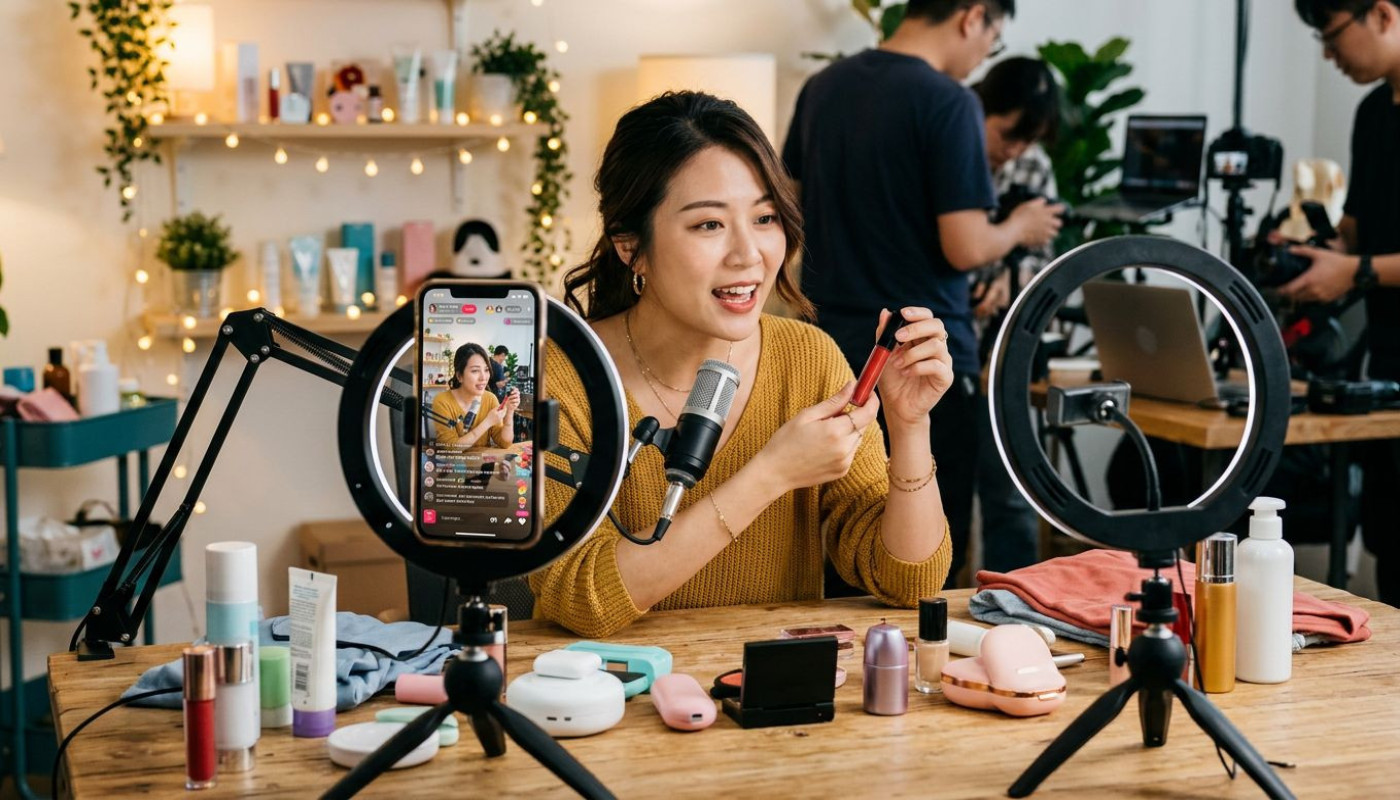
The most common mistake is to import the surface: a host, a ring light, a discount code. The more durable approach is to import the system. Start with objectives that can be measured beyond “views”, such as cost per engaged viewer, add-to-cart rate during the stream, conversion within 24 hours, and refund rate by SKU. Then design the stream like a retail launch: pre-select the assortment, lock inventory, build bundles, script demonstrations, and align customer service with the offers and shipping promises.
Channel choice matters, and it should reflect where your customers already are. TikTok Shop has accelerated the “in-app checkout” model in several countries, while Instagram Live, YouTube, and retailer-owned platforms can still work when the goal is education and lead capture rather than immediate transaction. In other words, live shopping is not one tactic; it is a format that can sit on different rails. Brands should test at least two approaches: in-app checkout streams for impulse-friendly categories, and site-directed streams for higher-consideration products where education lifts conversion later.
Budgets should be framed realistically. Live shopping requires production, talent, and performance marketing support, and the spend is rarely just a creator fee. Plan for studio time, moderation, customer service coverage, product seeding, and post-stream content cuts that can be reused as ads and PDP videos. Many Chinese operators amortise costs by repurposing the best moments into short-form clips that drive traffic back to future streams, creating a compounding loop. Western teams can do the same, and it is often the quickest way to justify the investment internally.
If you are entering China specifically, or trying to build a cross-border play that connects Chinese platforms with international supply chains, expertise becomes non-negotiable. Local regulations, platform rules, storefront operations, logistics, and customer expectations can change the economics quickly, and missteps are expensive. Some brands therefore work with specialist partners to map the route, from store setup to live operations and media. For readers assessing that path, a starting point is ECom Agency, which focuses on navigating China’s e-commerce ecosystem and the operational requirements that sit behind performance.
Planning your next steps: budget, cadence, and support
To move from curiosity to results, set a 90-day test plan with a clear cadence, realistic production spend, and measurable KPIs, and reserve inventory specifically for streams so offers never collapse mid-event. Check whether local grants or digitalisation aids exist for SMEs, because some markets subsidise e-commerce capability building. Above all, book resources early: live shopping punishes improvisation, and rewards prepared teams.
On the same subject

Is Quality Assurance Really The New Frontier For Sourcing Teams?

Is Storytelling The Missing Link In High-conversion Product Launches?

Unexpected Real Estate Moves Following Major News Events

How To Evaluate And Select The Best Shared Workspace For Your Business Needs

Exploring The Impact Of Coworking On Startup Success

How Structured Protocols Enhance Corporate Service Success

Maximizing Small Business Growth Through Expert Google My Business Strategies

Step-by-step Guide To Getting Started With Binary Options Trading
Exploring The Impact Of Web Design On Marketing Success

Strengthening your brand identity with storytelling techniques

The impact of voice search on business SEO strategies in the digital age

How A Free Email Verification Tool Enhances Business Communication Efficiency

How Continuous AI Evolution Shapes Modern Workspace Productivity

Exploring The Benefits Of Advanced E-commerce Plugins For Online Stores

How AI Enhances CRM Systems To Boost Business Productivity

How To Boost Product Adoption With Smart Engagement Strategies

How Honeycomb Cardboard Is Revolutionizing Product Shipping And Storage

The Benefits Of Integrating Cloud Technology In Outsourcing Operations

Transforming Customer Service: How Digital Platforms Enhance Engagement And Efficiency

Exploring The Impact Of Financial Regulations On Global Markets

Breaking Language Barriers in E-commerce: The Importance of SEO in International Business

How to Successfully Market Your Used CNC Lathe Online
